ZetaChain2026-09-29 05:43:11ZetaChain votes to move ZETA and Anuma to Solana as it winds down its own chainZetaChain token holders have approved a proposal to move ZETA and the project’s flagship AI app, Anuma, to Solana, with a plan to gradually shut down ZetaChain’s own Layer 1 after the asset migration is completed. The proposal passed on Sept. 20 with 99.4% support and 58% participation, though the migration has not yet been executed and a second proposal is still needed to finalize operational details. The move follows ZetaChain’s June 1 decision to pivot fully to AI and phase out its original cross-chain interoperability focus. Since then, Anuma and its private memory layer have become the center of the project’s strategy. ZetaChain argues that running an independent chain no longer fits the needs of its AI business, which now depends more on model orchestration, memory retrieval, privacy controls and user experience than on maintaining its own consensus network. Under the current plan, native ZETA would convert 1:1 into a Solana SPL token, with the token name, supply and vesting schedule unchanged. The proposal does not cover ZETA already issued on Ethereum and BNB Chain, and post-migration staking and rewards remain undecided. The broader question, according to the article, is whether ZetaChain can turn Anuma’s memory-based AI product and developer services into durable demand for ZETA inside a Solana-based setup.340
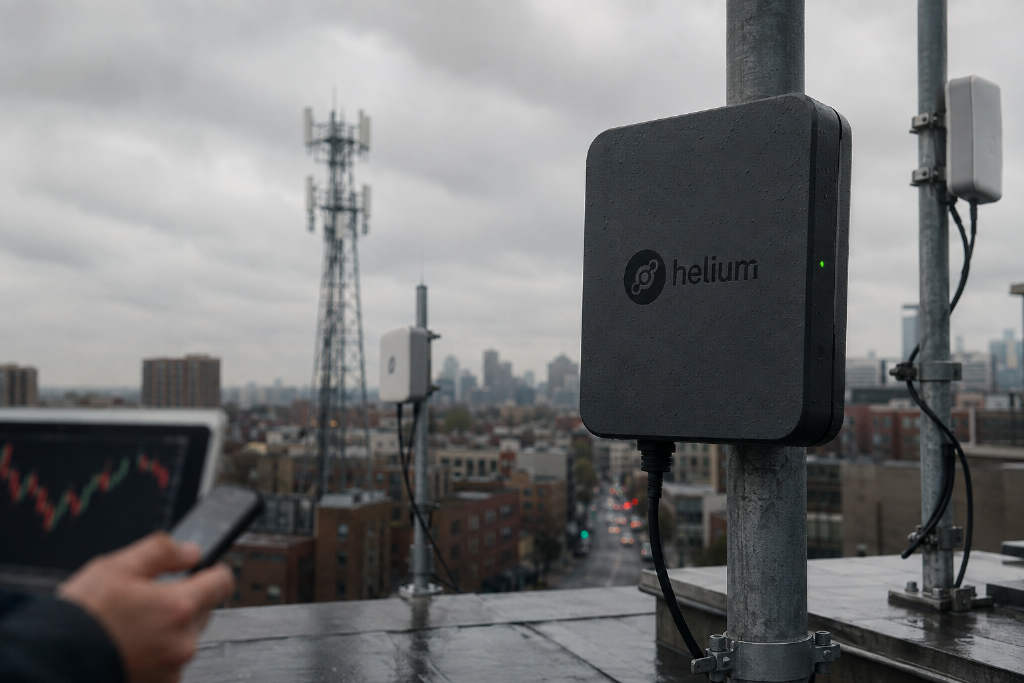
Helium2026-09-04 08:28:27Helium’s 5.7x rally faces a revenue reality check as HNT short squeeze meets weaker on-chain spendHelium’s HNT token surged from a multi-year low of $0.167 on Aug. 15 to an intraday high of $0.96 two weeks later, a 5.7x move that briefly pushed its market capitalization from roughly $31 million to about $95 million. Public catalysts were clear enough: the release and passage of HIP-150, news that Celina, Texas had shifted public Wi‑Fi into carrier coverage on the network, and the launch of HeliumOS, a B2B platform aimed at carriers and MVNOs. Yet the on-chain picture was far less straightforward. Rewardable carrier offload traffic rose 2.4x year over year, from 1.26 PB in August 2025 to 3.06 PB last month, while spending on mobile traffic Data Credits fell to $263,000 in August from a March peak of $1.47 million, a drop of 82%. The article argues that the rally was driven by both genuine business developments and aggressive position unwinds. HNT perpetual funding dropped below -1.2%, weekend short liquidations reached $1.6 million, and Aug. 30 volume hit $248 million, above the token’s entire market cap at the time. That left HNT repriced to a level where future growth now has to show up in carrier offload burns fast enough to outrun new issuance.480
crypto ventur2026-08-19 09:34:34Crypto VC after the unwind: fast token exits fade as investors move toward revenue, buybacks and longer holding periodsA long-form piece published by TechFlowPost argues that crypto venture capital is not disappearing after the speculative boom. It is being repriced. The article says the market now shows a split between strong top-line industry data and weak early-stage liquidity: institutions hold more than $175 billion in crypto assets through exchange-traded products, onchain projects generated $11 billion in fees over the last 12 months, and the sector logged $8.6 billion in M&A plus 11 IPOs. Yet Galaxy Research data cited in the piece shows only eight new VC funds launched last quarter, the lowest level since 2020, while quarterly investment fell to $4 billion, or roughly $16 billion annualized, about half of 2021’s $31 billion pace. The authors trace the problem to a crypto funding model built around early token listings and quick liquidity rather than durable business value. They argue that many token models failed because projects lacked real business models and token holders had no legal claim on operating income. In their view, the industry is now moving toward structures that tie revenue to tokens, including buybacks, while also reopening other exit routes such as acquisitions and IPOs. The article identifies three sectors that have already reached sustainable product-market fit: stablecoins, prediction markets and onchain perpetuals. It also points to tokenized Treasuries, tokenized equities, machine payments, onchain credit and compliance infrastructure as areas where early-stage opportunities may now be forming. The broader conclusion is that crypto investing is shifting away from broad thematic betting and toward specialized, patient capital focused on business quality, regulation and long holding cycles.660
a16z2026-08-18 12:43:00a16z Breaks Down the AI Compute Trade: Revenue Is Surging, but Capex and Profitability Still Cloud the PictureAndreessen Horowitz’s New Media team used its latest Charts of the Week to examine the AI infrastructure trade through a wider lens than headline demand growth. Moses Sternstein focused on neocloud companies such as CoreWeave, Nebius, and Applied Digital, arguing that the market’s question is no longer whether AI needs more compute, but whether providers can turn that demand into durable cash flow. The piece says many neocloud players entered the AI cycle with an advantage built during the crypto mining era: power access, data center capacity, cooling systems, and experience running dense compute loads. That legacy helped them scale revenue quickly, with CoreWeave reaching $2.6 billion in revenue in about 25 quarters versus 40 quarters for AWS after launch. Still, investors have not rewarded growth evenly. Over the past year, CoreWeave shares were down about 16%, while Nebius stayed closer to prior highs, highlighting concerns over capital intensity, depreciation, and rising interest expense. Sternstein also argues that AI is reshaping software unevenly rather than destroying SaaS across the board. Atlassian’s cloud revenue rose 31% year over year, and customers using its AI assistant Rovo were spending at nearly twice the growth rate of non-Rovo users. Databricks, meanwhile, said its Smart Router can cut average task costs by more than 30% by matching tasks with different model tiers. The article closes with data on widening enterprise AI spend gaps and diverging hiring patterns at OpenAI and Anthropic.1330
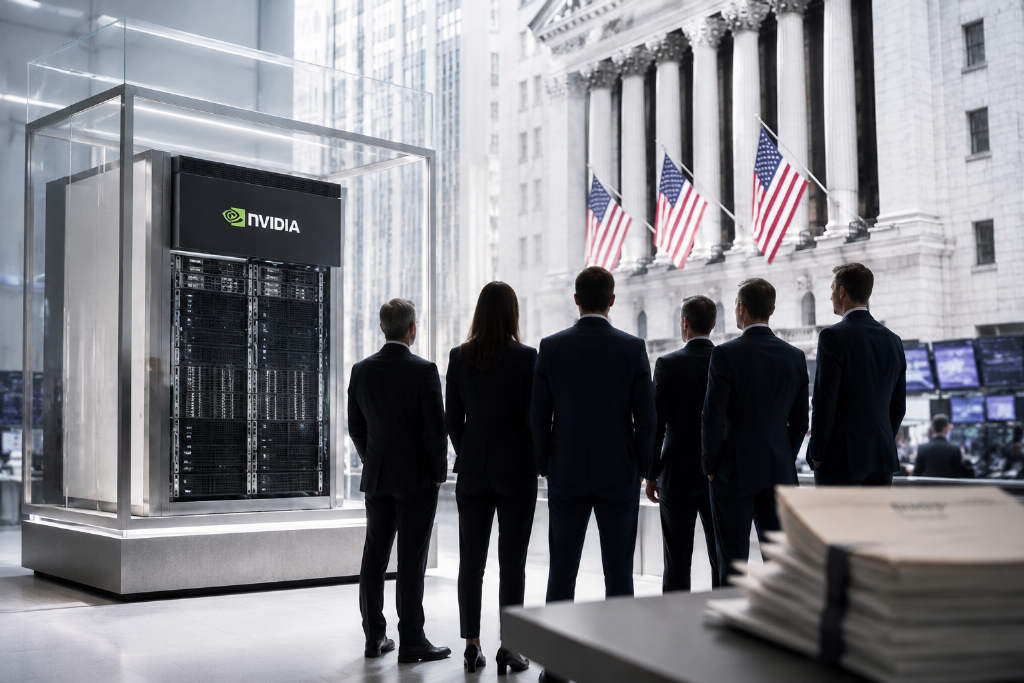
Jensen Huang2026-08-15 09:33:37Jensen Huang backs AI compute as an asset class with Wall Street money managersJensen Huang appeared alongside six Wall Street asset-management heavyweights this week to support the idea of turning AI compute into a standalone asset class, according to a report cited by China Central Television Finance and relayed by BlockBeats on Aug. 15. Analysts described the move as an example of Huang putting his own “token economics” idea into practice, while also showing that the AI boom is spreading beyond a race in technology and into a race for capital. The plan has not been embraced without questions. Investors have raised concerns about “circular financing” and debt risk tied to the latest proposal. In response, Huang moved to calm the market himself. He said Nvidia may offer a residual value support mechanism of up to 25% for a single investment project, and that each project would be evaluated carefully. After those remarks, market sentiment eased somewhat, according to the report.1400
Jensen Huang2026-08-15 09:27:42Jensen Huang Backs AI Compute as an Asset Class, While Debt Concerns SurfaceChainCatcher, citing China Central Television Finance, reported that Jensen Huang this week appeared alongside six Wall Street asset-management giants to support a push to turn AI computing power into a standalone asset class. The move was described by analysts as an extension of Huang’s own idea of “token economics,” and as a sign that the AI boom is moving beyond a race over technology into a contest over capital. The plan has also drawn investor concern. According to the report, questions emerged around “circular financing” and debt risk tied to the latest structure. In response, Huang stepped in again to calm the market. He said Nvidia may offer a residual-value support mechanism of up to 25% for a single investment project, while stressing that each project would be evaluated carefully. The report said market sentiment eased somewhat after his remarks.1480
Palantir2026-07-22 14:05:14Palantir CEO Targets Token Billing, Says Enterprises Are Paying Without Getting ValueAlex Karp said enterprise customers complain that token-based AI billing creates little value and exposes their data and business edge. Palantir is pushing open-weight models and sovereign deployment instead.430
NVIDIA2026-07-22 13:25:13Jensen Huang Unveils Token Economics as Nvidia Starts Full Vera Rubin ProductionAt GTC Taipei 2026, Jensen Huang said AI data centers are shifting from hardware sales to monetized compute. Nvidia also said Vera Rubin is now in full production, with Groq-backed inference pushing 1GW annual revenue estimates to $300 billion.470